The Wall Is a Lie: What's Really Happening When You Stop Getting Better
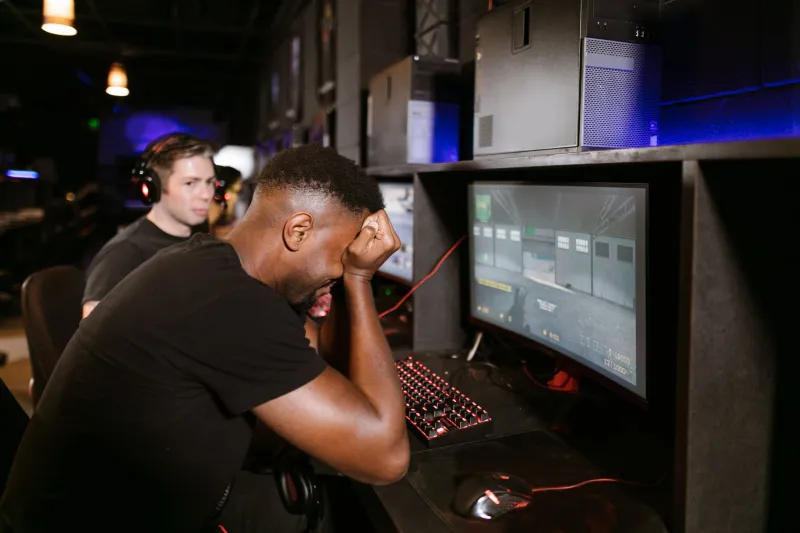
You've been grinding for months. Your mechanics feel sharp, your game sense is legit, and you're making the right calls more often than not. But the rank? Stuck. The leaderboard doesn't care about your highlight clips or your positive mental attitude posts. You're parked at the same ELO like your account is nailed to the floor.
So you do what most players do — you start wondering if this is just it. Maybe you've hit your limit. Maybe some people are just wired for this and you're not one of them.
Here's the thing: that thought is the wall. Not your mechanics. Not your game sense. The story you're telling yourself about what the plateau means.
What's Actually Going On In Your Brain
Neuroscience has a term for what happens when you practice something long enough to get decent at it: automaticity. Your brain has essentially paved a highway for those actions. Clicking heads, tracking movement, rotating on the map — these stop requiring conscious processing and become reflexive. That's a good thing early on. It's how you stop dying to basic mistakes.
But here's the trap. Once those skills go automatic, your brain stops building new neural pathways around them. You're no longer learning — you're just running the same script faster. Researchers who study skill acquisition call this the "OK plateau," a term popularized by science journalist Joshua Foer after he spent a year studying memory champions. The idea is simple: once you're good enough to stop embarrassing yourself, your brain shifts into maintenance mode.
For competitive gamers, this usually hits somewhere in the mid-ranks. You're no longer the player who feeds every fight, but you're also not making the high-level reads that carry games. You're competent. And competence, weirdly, is the enemy of elite.
Why Your Current Practice Isn't Working Anymore
Most players respond to a plateau by doing more of whatever got them there. More hours in the aim trainer. More ranked games. More VOD reviews of the same plays. The logic makes sense on the surface — if grinding worked before, grind harder.
But this is exactly where that logic breaks down.
Deliberate practice, the kind that actually moves the needle, has to operate at the edge of your current ability. Not inside your comfort zone — right at the boundary where you're failing often enough that your brain is forced to adapt. When you're running drills you've already mastered or playing ranked on autopilot, you're not practicing. You're performing. And performance doesn't build new skills; it just reinforces existing ones.
Pro players talk about this constantly, even if they don't always frame it in scientific terms. Faker has mentioned in interviews that he actively looks for situations in-game that feel uncomfortable — not because he enjoys struggling, but because discomfort is the signal that something new is being built. Shroud, during his competitive days, was known for deliberately putting himself in mechanically impossible scenarios in scrimmages to stress-test his reactions under pressure he hadn't faced before.
The pattern is consistent across games and genres: the players who break through plateaus are the ones who treat discomfort as data, not failure.
The Counterintuitive Moves That Actually Work
So what does deliberate practice look like when you're stuck in mid-rank purgatory? A few things that players and coaches point to repeatedly:
Play a role you're bad at. This one stings, but it works. Forcing yourself into an unfamiliar position — support if you're a carry main, controller if you've only played entry — breaks the automaticity loop and forces your brain to re-engage consciously. You'll lose more in the short term. That's the point.
Slow down your decision-making, on purpose. This sounds like bad advice for a competitive game, but hear it out. When you play on autopilot, you never examine why you made a decision. Deliberately pausing — even mentally narrating your reasoning out loud while playing — forces your prefrontal cortex back into the loop. Some coaches call this "explicit processing." It temporarily tanks your performance, then spikes it once the reasoning becomes instinct.
Find a player who beats you consistently and figure out exactly why. Not generally why — specifically why. What are they doing in the moments right before they win the exchange? This is harder than watching your own replays because it requires you to genuinely credit someone else's skill, which most competitive players are bad at.
Set process goals, not outcome goals. Instead of "I want to hit Diamond this season," try "I want to land a specific mechanical technique in at least three games today." Outcome goals are motivating but they don't tell your brain what to build. Process goals create the specific neural targets that training actually needs.
The Grind Isn't the Problem — The Mindset Around It Is
Nobody's saying you need to play fewer games. Volume still matters. But volume without intentional stress, without deliberately targeting your weakest points, is just time spent staying the same.
The players who blast through plateaus share one trait more than any other: they've stopped treating struggle as evidence of a ceiling and started treating it as evidence of growth happening in real time. The neurological work of building new skills feels awful. It's supposed to. That feeling isn't the wall — it's the construction crew.
If you've been stuck for a while, ask yourself honestly: when's the last time you did something in-game that genuinely scared you? When's the last time you tried a technique so far outside your current skill level that you embarrassed yourself? If you can't remember, you've probably been in maintenance mode longer than you think.
The skill ceiling isn't something you bump into. It's something you build by refusing to stop building.
Get uncomfortable. That's where the mad skill actually lives.