Train the Chaos Before the Chaos Trains You: Building Clutch Decision-Making in Low-Stakes Lobbies
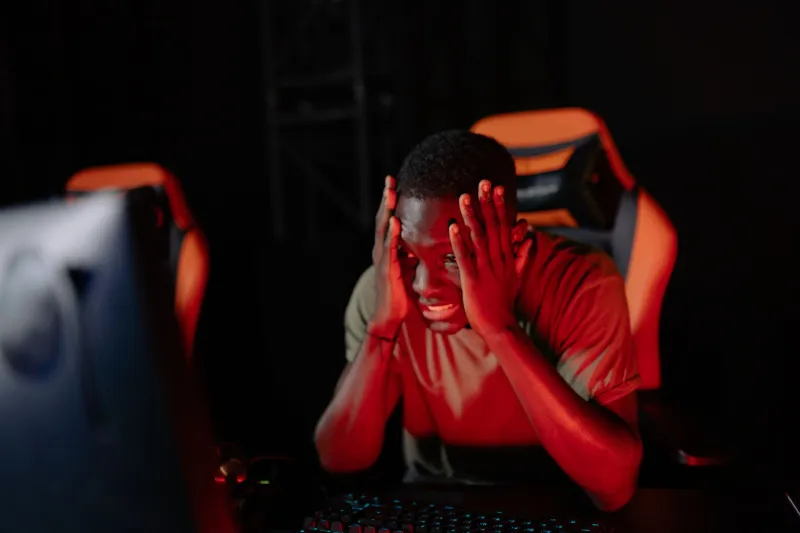
Here's a scenario you've lived at least once. You're in a ranked game. A teammate goes off-script — maybe they're tilted, maybe they're just unpredictable — and suddenly the gameplan you had in your head is gone. You freeze for half a second. You default to something safe. You lose the round, or the objective, or the momentum, and you spend the next ten minutes wondering why you couldn't just adapt.
The answer isn't that you're bad at adapting. It's that you've never practiced it.
Decision-making under pressure is a skill. Not a personality trait, not something you either have or you don't — a trainable, improvable, deliberate skill. And like every other skill in competitive gaming, if you only attempt it when the stakes are real, you're learning the hard and expensive way.
The Problem With Ranked as Your Only Training Ground
Ranked mode is the worst possible place to develop new cognitive habits. That's not a knock on ranked — it's just the reality of what high-stakes environments do to learning. When LP is on the line, your brain defaults to whatever it already knows. New decision-making patterns require conscious processing, and conscious processing slows you down in real-time play. So you fall back on habit, the lobby punishes you anyway, and you walk away having reinforced old patterns instead of building new ones.
This is why players can grind ranked for years and still freeze when a teammate goes rogue or a rotation falls apart. They've never practiced the response to chaos — only the execution of a plan.
Unranked modes, casual lobbies, and custom games exist for exactly this reason. But most players waste them.
What "Deliberate Practice" Actually Means in a Casual Lobby
There's a difference between playing casually and practicing casually. One is just playing without consequences. The other is using the absence of consequences to try things you'd never risk in ranked.
Deliberate practice in unranked means going into a session with a specific skill target — not just "play well" but something measurable and uncomfortable. A few examples that actually work:
Shotcalling out loud (or in chat) on every rotation. Even if nobody listens. Especially if nobody listens. The goal isn't to lead the team — it's to build the habit of reading the game and articulating a call before the moment passes. Most players have reads they never act on because they second-guess themselves into silence. Forcing yourself to call it, even in a low-stakes lobby, trains the reflex.
Playing around a tilted or disengaged teammate intentionally. Next time someone on your unranked team is clearly checked out, don't ignore them — study them. What's their pattern? Where are they going to be? How do you compensate for the gap they're leaving? This is a real skill that ranked will test constantly, and casual lobbies are the only place to experiment with solutions without consequence.
Making the "wrong" call on purpose to test outcomes. This one sounds counterintuitive, but it's powerful. Pick a decision point — an objective fight, a rotation call, a resource trade — and deliberately make the choice you'd normally avoid. Not recklessly, but intentionally. Then watch what happens. You'll either discover the "wrong" call wasn't as bad as you thought, or you'll understand why it fails in a way that makes your instincts sharper.
Shotcalling Is a Muscle You're Not Exercising
Here's something that doesn't get talked about enough in solo queue culture: shotcalling is terrifying for most players, not because they don't have reads, but because making a call means being accountable if it fails. In ranked, that fear is rational — a bad call gets flamed. So players stay quiet, play reactively, and wonder why they can't carry games where the team needs direction.
Custom game modes strip out the social cost. Nobody's going to rage at you for a bad call in a casual lobby the same way they would in a ranked match. That reduced social pressure is a feature, not a bug. It's the exact environment where you can build the confidence to make calls before you're ready, fail safely, and recalibrate.
The goal is to get to a point where calling feels automatic — where you're reading the game and communicating simultaneously without it costing you processing power. That only happens through repetition, and repetition only happens when the stakes are low enough to try.
The Mental Flexibility Gap Between Solo Carries and Team Players
There's a specific kind of player who dominates solo queue but struggles in organized play. They're mechanically sharp. Their individual stats look great. But the moment the game stops following the script they're used to — unexpected drafts, off-meta strategies, teammates who play nothing like they expected — they start bleeding.
The gap isn't mechanical. It's mental flexibility: the ability to read a situation that doesn't match your preparation and generate a good response anyway.
Mental flexibility is built through exposure to chaos in controlled doses. Unranked lobbies are chaos you can study. Every unpredictable teammate is a case study. Every game that goes sideways from minute one is a chance to practice the skill that ranked will eventually demand from you without warning.
The best team players in any esport — the ones who elevate everyone around them — aren't just mechanically gifted. They've played a thousand versions of "this isn't going as planned" and built a mental library of responses. They didn't build that library in ranked. They built it in the reps nobody was watching.
Start Treating Low-Stakes Games Like a Lab
Next time you queue into an unranked or casual match, go in with one specific target. Not "play better" — something precise. Practice one shotcall per objective. Adapt your playstyle to compensate for one struggling teammate. Make one unconventional decision you'd normally talk yourself out of.
Do this consistently for a few weeks and then get into ranked. The chaos will still be there. The difference is you'll have a toolkit for it.
The ranked lobby doesn't care whether you practiced or not. But your results will.