VOD Addiction: Why Watching Pro Gameplay Is Quietly Sabotaging Your Rank
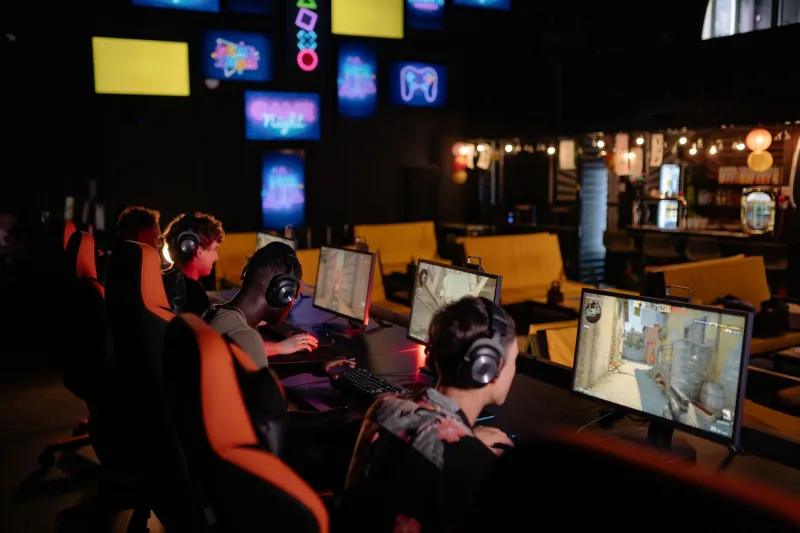
There's a ritual that plays out in bedrooms and gaming dens across the country every single night. A player loses a ranked match, feels the sting, and immediately pulls up a VOD of their favorite pro. They watch. They rewind. They study the insane flanks, the pixel-perfect aim, the clutch rotations that look like they were choreographed by a film director. Then they queue up again and try to replicate it — and it falls apart spectacularly.
Rinse and repeat. For months.
Here's the uncomfortable truth nobody in the content ecosystem wants to say out loud: watching pro gameplay, without the right framework, might actually be making you worse. Not because the pros aren't worth studying. They absolutely are. But because most players are extracting entirely the wrong lessons from what they're watching.
The Highlight Reel Brain
Human brains are wired to remember the dramatic stuff. The 1v4 clutch. The insane sniper shot through smoke. The perfectly timed ultimate that wipes an entire team. Those moments are designed to be memorable — that's why clips go viral, that's why streamers react to them, that's why they get spliced into montages set to phonk music.
But those moments are the output of hundreds of micro-decisions that happened in the three minutes before the camera got interesting. When you watch a pro make a jaw-dropping play and think, "okay, I'm doing that," you're essentially watching a chef plate a Michelin-star dish and deciding you're ready to open a restaurant because you copied the garnish.
The play you see is the last frame of a decision tree that started with a wave clear, a cooldown track, a resource advantage, and a read on the opponent's positioning that took years of reps to develop instinctively. Strip all of that context away, and you're not learning the play — you're learning a costume.
Context Is Everything, and You're Ignoring It
Let's use a concrete example. You're watching a pro in a tactical shooter hold an aggressive off-angle that pays off big. Enemy walks into it, pro gets the kill, the crowd goes nuts. You think: that's the spot, I need to hold that angle.
What you didn't clock: the pro had already tracked the enemy's last two rotations and knew statistically where they'd push from. They had a teammate covering their flank so they could commit fully. Their economy was ahead, meaning a death wouldn't cripple the round. The enemy team had already used their utility. The pro had a specific crosshair placement pre-aimed because they'd seen this exact scenario play out 200 times at the top level.
You have none of that. So you hold the same angle, get traded immediately, and wonder why the play didn't work. It didn't work because the play was never the play. The information state was the play.
This is the core failure of passive VOD consumption: it trains your eyes to recognize outcomes without training your brain to recognize the conditions that make those outcomes possible.
The Osmosis Myth
There's a belief in a lot of gaming communities that enough exposure to high-level play will eventually seep into your own game. Watch enough Faker and you'll start thinking like Faker. Watch enough s1mple and the reads will just... click.
That's not how skill acquisition works. Passive observation without active processing is entertainment, not education. Your brain isn't quietly cataloging decision frameworks in the background while you watch. It's enjoying the spectacle and building a superficial pattern library of what cool plays look like rather than why cool plays happen.
Research in skill development consistently shows that improvement comes from deliberate practice — targeted, effortful repetition with feedback. Watching someone else do something difficult, no matter how many hours you log, doesn't substitute for doing it yourself under pressure.
How to Actually Learn From Pro Gameplay
None of this means you should stop watching VODs. It means you need to change how you watch them.
Pause before the play, not after. Stop the VOD right before the interesting moment happens. Ask yourself: what information does this player have right now? What are their resources? Where are the enemies, and how does the pro know that? What would you do in this position? Then let it play out and compare your read to theirs. That gap — between your instinct and their decision — is where your actual learning lives.
Study the boring parts on purpose. The macro phase. The positioning before the fight. The utility usage two minutes before the clutch. This is where high-level play actually lives, and it's where your game will improve fastest. If you're only watching the action, you're skipping the syllabus.
Extract principles, not plays. Instead of noting "pro held this angle in this spot," note why that angle was viable: it was unexpected, it denied a key piece of information to the enemy, it was supported by a teammate. Now you have a transferable concept, not a single-use trick.
Watch your own replays with the same energy. Most players will spend three hours watching a pro's VOD and zero minutes watching their own gameplay. Flip that ratio. Your replays are the most targeted study material available to you because they're full of your specific mistakes in your specific game state. Pro VODs show you what peak play looks like. Your replays show you the actual distance between that peak and where you currently stand.
The Impersonation Trap
There's also a psychological layer worth naming. When you spend a lot of time watching one pro, you start to internalize their playstyle as the correct playstyle. You start forcing their tendencies into your own game, even when your mechanics, your team composition, or your rank's meta doesn't support it.
Pros are playing for specific outcomes in specific contexts. A high-aggression playstyle that works in a coordinated pro environment with voice comms and practiced teamwork falls apart in solo queue where your teammates don't know the plan. Mimicking that aggression without the infrastructure behind it isn't skill expression — it's just feeding.
The best competitors don't try to play like someone else. They study multiple players, extract transferable principles, and build a style that fits their own strengths and their actual game environment.
Watch Less, Think More
Here's the mad skill move that almost nobody makes: cut your passive VOD time in half and replace it with active review of your own games. Spend the VOD time you do keep being genuinely analytical — pausing, questioning, extracting principles. And then go play, fail, and actually build the reps that turn understanding into instinct.
The pros you're watching didn't get good by watching pros. They got good by playing, reviewing, adjusting, and playing again — thousands of times. The VODs are a supplement, not a shortcut.
Stop watching the highlight. Start studying the game state that made it possible. That's where the real skill tree is hiding.


