Break the Game, Change the Meta: The Wildest Exploits That Rewrote Competitive History
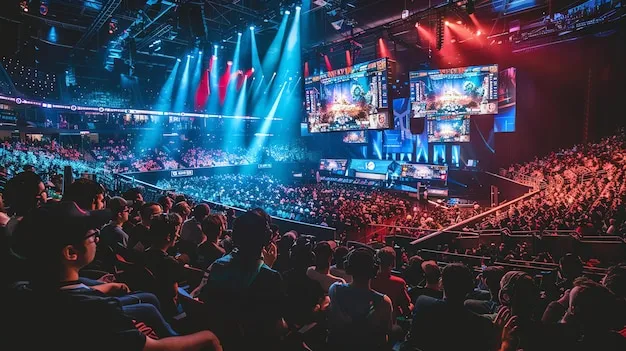
Photo: competitive gaming tournament dramatic moment esports stage crowd, via img.freepik.com
Every game has rules. And somewhere out there, there's always a player staring at those rules thinking: but what if I didn't?
The history of competitive gaming is littered with moments where someone found a crack in the system — a bug, an unintended mechanic, a build order the developers never imagined — and exploited it so thoroughly that the entire ecosystem had to scramble to respond. Some of these players became legends. Some got banned. Some did both. All of them changed the game forever.
This is a love letter to the chaos merchants. The ones who didn't just play the game — they broke it wide open.
The Zerg Rush That Rewrote an Entire Genre
Let's start at the foundation. In the early days of StarCraft: Brood War, competitive play was still figuring itself out. The Korean professional scene was exploding in popularity, and players were pushing the limits of what the game's mechanics could do.
Then came the Zerg rush meta. Not just the basic early aggression — the hyper-optimized, frame-perfect build orders that Korean pros developed through thousands of hours of practice in PC bangs across Seoul. Players like Julyzerg and later Jaedong weren't just using Zerg's early-game aggression; they were executing build orders with mechanical precision that Blizzard's design team had never anticipated as viable at the highest level.
The ripple effects were enormous. Tournament organizers had to reconsider map pool selection entirely — maps that were standard in casual play became effectively unplayable at pro level because they allowed rushing strategies to be executed before opponents could meaningfully respond. Blizzard eventually issued patches, but the community had already moved faster than the developers. It was one of the first major examples of a competitive scene outpacing its own game's design.
The legacy? Build order theory became a cornerstone of RTS competitive play, and the concept of "solved" openings versus "flexible" openings is now fundamental to how games like StarCraft II and Age of Empires IV are coached and analyzed.
Wavedashing and the Smash Bros. Civil War
Few exploits in competitive gaming history have generated as much sustained controversy as wavedashing in Super Smash Bros. Melee. For the uninitiated: wavedashing is a technique that emerged from a physics quirk in Melee's engine. By air-dodging diagonally into the ground at the right angle, a character slides across the stage while remaining in a grounded state — essentially giving players a form of movement that was never intentionally programmed.
Nintendo didn't put it there on purpose. The community found it, named it, and built an entire competitive framework around it. By the early 2000s, high-level Melee play was inseparable from wavedashing, L-canceling, and a suite of other "advanced techniques" that the game's developers neither designed nor endorsed.
The drama that followed was operatic. Nintendo's relationship with the competitive Smash scene has been famously complicated — the company has historically been reluctant to officially support Melee esports, partly because the game's competitive meta is built on mechanics they consider unintended. Tournament organizers had to navigate whether to allow these techniques, with some early events banning them entirely before the community consensus swung decisively in favor of keeping them legal.
The Smash Bros. situation essentially forced a broader conversation about a question that still doesn't have a clean answer: who owns the competitive definition of a game? The developers? The players? The tournament organizers? The community's answer — at least for Melee — was loud and clear.
The CS:GO Boost That Almost Broke a Major
Fast forward to the CS:GO era. Competitive Counter-Strike has always had a complicated relationship with position exploits — spots on maps where players can reach unintended locations through boost mechanics or clipping errors. But few moments crystallized the issue quite like the infamous Olofmeister boost at ESL One Katowice 2015.
During a match against Team LDLC, Fnatic's players discovered and executed a boost on the Overpass map that placed a player in a position with near-complete visibility of a major chokepoint — a position that was geometrically inaccessible through normal play. The boost was technically legal under the rules at the time. It was also, by most accounts, completely broken.
The fallout was immediate and messy. LDLC filed a protest. Tournament admins deliberated for hours. The match was eventually replayed after Fnatic withdrew their protest under massive community pressure. The incident sparked a furious debate about the line between "smart play" and "exploitation," and ESL updated their rulebook within days to explicitly address position exploits.
Valve also got to work. The Overpass map received a geometry update that patched the specific boost, and the broader CS competitive ecosystem formalized clearer guidelines around boost legality. One match. One clip. Rulebooks changed across multiple tournament circuits.
Pokémon Speed and the Species Clause
Competitive Pokémon doesn't get enough credit for its own exploit history. The early days of the VGC (Video Game Championships) format were defined by a kind of arms race between players finding broken combinations and Nintendo scrambling to establish rules around them.
The Species Clause — the rule preventing players from using two of the same Pokémon on a single team — exists specifically because players discovered that duplicating certain broken Pokémon created effectively unbeatable team compositions. Before the clause existed, tournament play was devolving into mirror matches of whoever had optimized the most broken single species.
Similarly, the Sleep Clause (preventing players from putting more than one opposing Pokémon to sleep) was a community-invented rule that tournament organizers adopted after players exploited sleep mechanics to create unwinnable stall loops. The competitive Pokémon scene is, in many ways, a living document of rules that were written in response to players breaking the game.
What These Moments Built
Here's the thing about all of these stories: the drama was real, the rule changes were necessary, and the players involved were genuinely pushing the boundaries of what competitive integrity means. But every single one of these moments made esports better.
The Smash community's fight over wavedashing produced a deeper philosophical framework for what competitive gaming should be. The CS:GO Overpass incident forced tournament organizers to write more precise rulebooks. StarCraft's build order wars produced a coaching and analysis culture that became the template for modern esports preparation.
Breaking the game, it turns out, is one of the ways the game gets built. The mad plays don't just make highlights — they make history.
And somewhere right now, in a ranked lobby or a local tournament bracket, someone is staring at a mechanic nobody else has noticed yet. The next chapter is always being written.