Ice in Your Veins: The Mental Blueprint Behind Every Clutch Play
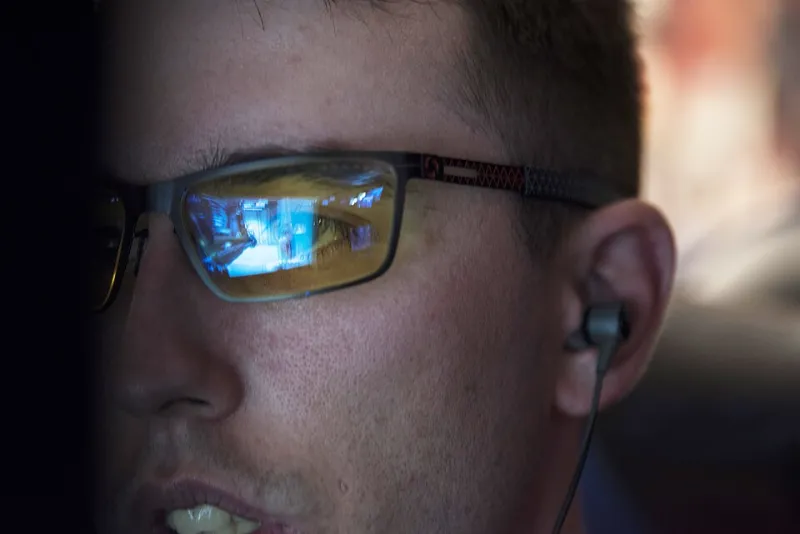
Photo: U.S. Air Force photo by Airman William Tracy, Public domain, via Wikimedia Commons
You've seen it a hundred times. One player left, pistol round, enemies stacking site, crowd going absolutely insane. And somehow — somehow — they win. Not because they got lucky. Not because the other team choked. Because they were built different, mentally.
We're not talking about raw mechanical skill here. Plenty of Diamond-rank players have the aim. What they don't always have is the psychological wiring that lets elite competitors treat a $200,000 grand final the same way they'd treat a casual warmup game. That mental edge? It's real, it's trainable, and it's way more accessible than most grinders realize.
What Sports Science Actually Says About Clutch Performance
Dr. Haley Perlus, a performance psychology consultant who has worked with both traditional athletes and esports competitors, describes the clutch state as "a paradox of heightened arousal paired with controlled attention focus." In plain English: your body is flooded with adrenaline, but your brain has learned to use that energy instead of being hijacked by it.
The science behind this traces back to the Yerkes-Dodson curve — a century-old model that shows performance peaks at moderate arousal levels. Go too low (under-stimulated, bored, complacent) and your play suffers. Spike too high (panic, tilt, tunnel vision) and it crashes. Elite competitors have essentially trained their nervous systems to hit that sweet spot on demand, even when the stakes are sky-high.
What makes esports uniquely interesting is the speed. A Valorant clutch can unfold in under ten seconds. A fighting game comeback happens in frames. There's no timeout, no halftime, no walking back to the huddle. Your mental recalibration has to happen in real time, between actions, sometimes mid-combo.
The Breathing Trick That Pros Actually Use
Ask any professional player — from CS2 riflers to Street Fighter 6 competitors — about their pre-match or mid-round routines, and breathing comes up constantly. It sounds almost too simple, but the physiology is legit.
Box breathing, popularized by Navy SEALs and now widely adopted in esports performance coaching, follows a four-count pattern: inhale for four seconds, hold for four, exhale for four, hold for four. Rinse and repeat. This technique directly stimulates the parasympathetic nervous system, which essentially pumps the brakes on your fight-or-flight response without dulling your alertness.
NRG Esports and several other organizations have embedded performance coaches who teach variants of this specifically timed around in-game pauses — the few seconds between rounds in Valorant, the loading screen between stocks in Smash, the buffer time before a CS2 half ends. The idea is to use those micro-windows to reset, not spiral.
Process Over Outcome: The Mindset Shift That Changes Everything
One of the most consistent themes among clutch performers is a refusal to think about the scoreboard while they're playing. Sounds counterintuitive, right? You're competing. The score matters. But the mental framework that enables clutch plays is almost militantly process-focused.
T1's Valorant roster has spoken publicly about their in-game communication emphasizing what to do next rather than cataloguing what just went wrong. When a teammate gets picked off in a bad position, the clutch-capable player doesn't process it as "we're losing" — they immediately shift to "what's the optimal play given current information."
This is sometimes called a "performance process focus," and it's been documented in studies on basketball free-throw shooters, tennis players, and — more recently — esports athletes tracked during tournament play. The brain, when locked into task execution, is less susceptible to the kind of self-monitoring anxiety that kills performance. You stop thinking about missing and start thinking about the shot.
Training the Clutch: Practical Drills for Your Ranked Grind
Here's where it gets useful for you. The mental tools pros use aren't locked behind a six-figure team contract. They're trainable habits, and you can start building them tonight.
Simulate pressure deliberately. One of the most effective drills competitive coaches recommend is artificially raising the stakes of practice. Play ranked with a consequence attached — even something small, like having to do push-ups for every tilted decision you make. Your brain needs repeated exposure to pressure to normalize it.
Build a micro-reset ritual. Develop a consistent physical anchor you use every time you need to refocus — a specific breath, pressing your feet into the floor, a short phrase you say internally. Over time, this ritual becomes a mental shortcut that tells your nervous system "we're in control here." Pros call these "reset cues," and they're used between every single round by serious competitors.
Review your mental game, not just your mechanical game. Most players VOD review to check their crosshair placement or economy decisions. Almost nobody reviews the moments where they tilted, panicked, or made decisions driven by frustration. Start doing that. Identify your tilt triggers and build specific response plans for them.
Embrace the high-stakes moment. This sounds obvious but it runs deep. A lot of players subconsciously avoid clutch situations — they over-rotate, they sacrifice themselves early, they opt for the safe play that keeps them from having to perform under pressure. Leaning into those moments in scrims and ranked, treating them as reps rather than threats, is how you build genuine clutch confidence.
The Outlast Mentality
At the end of the day, the players who consistently deliver in the biggest moments share one thing above everything else: they've accepted that pressure is part of the game, not an interruption of it. The clutch isn't a miracle. It's the product of thousands of hours of deliberate mental conditioning stacked on top of mechanical skill.
You've got the aim. You've got the game sense. Now build the part that most players skip. Because when it's one-versus-four and the whole server is watching, the only thing standing between you and the highlight reel is what's happening between your ears.