Gear Won't Save You: The Expensive Lie Behind the Perfect Setup

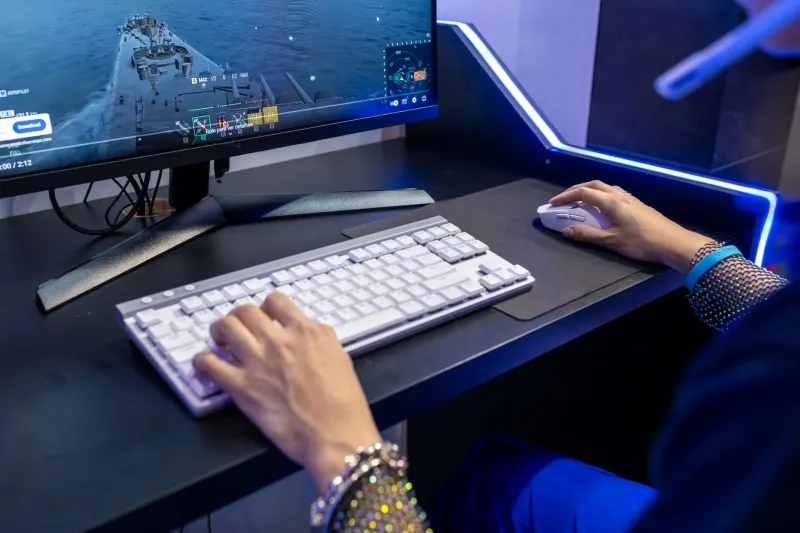
Photo by Photo by sdl sanjaya on Unsplash on Unsplash
There's a ritual every competitive gamer knows. You lose a ranked match. Something felt off — maybe your aim, maybe your reaction time. So you open a new tab, start browsing 240Hz monitors, and convince yourself that this is the missing piece. The upgrade that finally bridges the gap between where you are and where you want to be.
It's a comforting story. And it's almost entirely fiction.
The Psychology of the Gear Spiral
Human brains are wired to seek controllable solutions to uncomfortable problems. Losing because of a skill gap? That's painful and slow to fix. Losing because your mouse has 2ms of extra latency? That's solvable with a credit card by Thursday. Psychologists call this effort substitution — swapping hard, ambiguous work for easier, tangible action that feels like progress.
In gaming, this plays out constantly. Players spend weekends researching polling rates instead of reviewing their VODs. They debate keycap materials in Discord servers while their positioning fundamentals stay broken. The gear becomes a psychological buffer between them and the uncomfortable truth: the problem is the gameplay, not the hardware.
And the industry knows it. Peripheral marketing is specifically engineered to link product specs to competitive outcomes. "Pro-level performance." "Tournament-grade precision." The implication is always the same — buy this, play like that. It's a billion-dollar industry built on the gap between where players are and where they desperately want to be.
When Gear Actually Matters (And When It Doesn't)
Here's the honest version: equipment does matter, but only within specific conditions and up to a hard ceiling that most players never approach.
If you're playing on a 60Hz monitor in 2025, upgrading to 144Hz is a legitimate, measurable improvement. The visual clarity and reduced motion blur genuinely affect your ability to track fast-moving targets. Same goes for a mouse with consistent sensor performance if yours is skipping or stuttering. These are real gains.
But here's the ceiling: once you're above roughly $80-100 in any peripheral category, the performance returns diminish to near-zero for the vast majority of players. The difference between a $90 gaming mouse and a $180 gaming mouse is imperceptible in actual ranked play. The difference between your current aim and the aim you'd have after 30 focused hours of intentional practice? That's a canyon.
A useful framework: ask yourself whether the limitation you're trying to solve is hardware-imposed or skill-imposed. If you're losing duels because your crosshair placement is consistently off-angle before the fight even starts, no peripheral change touches that. If your monitor is genuinely producing input lag that delays your reaction beyond your control, that's hardware-imposed. Be brutally honest about which bucket your problem actually lives in.
The Placebo Effect Is Real — And Dangerous
Here's where it gets psychologically interesting. New gear genuinely can produce short-term performance boosts — not because of the hardware, but because of belief. The placebo effect in competitive performance is well-documented. A new mouse makes you feel sharper, so you play with more confidence, so you actually perform better for a few sessions.
The danger is misattributing the cause. Players who see a two-day rank jump after a new purchase often credit the gear rather than the temporary confidence spike. This creates a feedback loop: next slump, buy more gear, feel confident again briefly, confirm the belief. Meanwhile, the underlying skill gaps compound untouched.
Some of the best players in North America grind on mid-range setups by choice, specifically to avoid building performance dependencies on equipment. When your game is dialed in at 144Hz, playing a LAN event on someone else's 165Hz rig shouldn't feel like a handicap. If it does, you've built a crutch.
The Audit Your Setup Actually Needs
Before your next peripheral purchase, run through this checklist honestly:
1. Can you articulate the specific mechanical problem you're trying to solve? "I want to play better" isn't a hardware problem. "My mouse skips when I flick past 45cm/360" is potentially a hardware problem.
2. Have you spent equivalent time and money on gameplay fundamentals? Aim trainers, coaching sessions, VOD review time, and mental performance resources all have documented, measurable returns. Most players haven't maxed out these returns before chasing hardware gains.
3. Do the pros you're comparing yourself to actually use what you're buying? Sponsored pros often play on gear they're paid to endorse, not gear they'd choose freely. And they're competing at a level where marginal gains matter — you're probably not there yet.
4. Would this upgrade still feel necessary if you won your last five matches? If the answer is no, the gear isn't the variable. Your mental state is.
Redirect the Energy
The drive behind gear obsession isn't inherently bad. It's competitive energy — the desire to improve, to close the gap, to take the game seriously. That drive is exactly what builds mad skill when it's pointed at the right targets.
Channel it into a review session of your last five losses. Put it toward a coaching session with someone two ranks above you. Use it to build a deliberate practice routine around your weakest mechanics. These investments don't have the same immediate dopamine hit as unboxing a new mouse, but they compound in ways that hardware never will.
Your setup is probably good enough. The question is whether you are.