You Can Win a LAN but Choke on a Stream — Here's the Brain Science Behind That Gap

Photo by Photo by ELLA DON on Unsplash on Unsplash
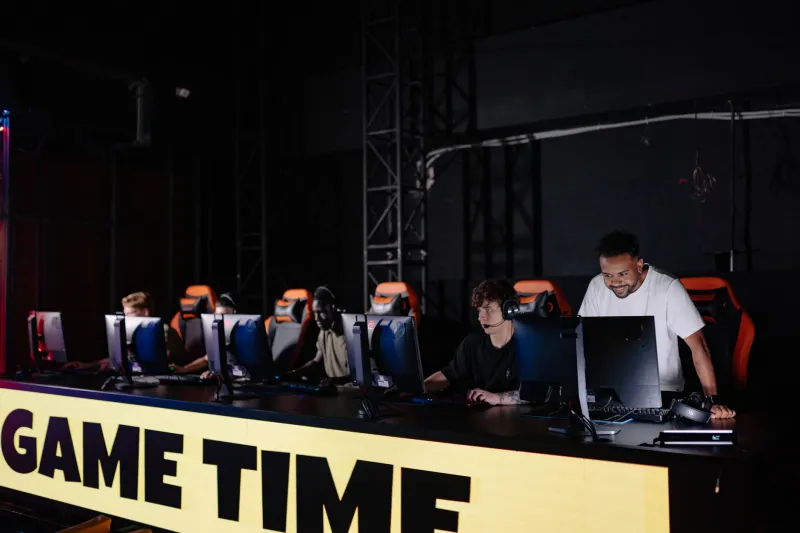
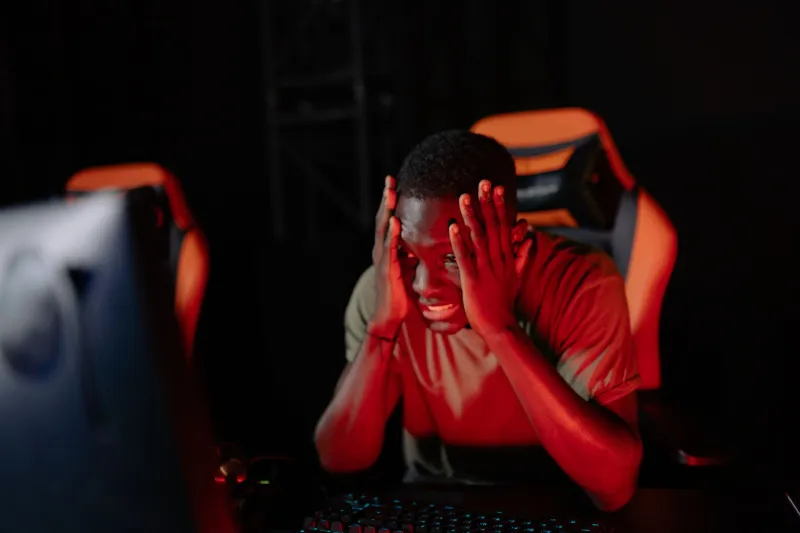
Think about the last time you watched a player who absolutely bodies offline competition sit down for a stream and look completely average. The reads aren't there. The aggression is off. The decision-making that looked surgical at a LAN feels hesitant and second-guessed on broadcast.
Your first instinct might be to write it off as a bad day. But coaches and sports psychologists who work inside esports are increasingly convinced it's something more systematic than that. Tournament dominance and streaming performance aren't just two versions of the same skill — they're drawing on genuinely different psychological resources. And for a lot of players, those resources don't overlap the way you'd expect.
The Pressure Isn't the Same Pressure
On the surface, a high-stakes tournament and a live stream both look like "performing under pressure." But the nature of that pressure is fundamentally different, and your brain responds to each in distinct ways.
At a LAN, pressure is bounded. There's a start time, an end time, a bracket, an opponent. The stakes are high but they're defined. Your nervous system can calibrate to that. Elite competitors who thrive in tournament environments have often spent years conditioning themselves to perform inside that specific kind of contained, high-intensity window. The arousal is there — the focus is sharp, the stakes feel real — and for the right personality type, that structure is actually helpful.
Streaming flips that structure entirely. A livestream is open-ended, perpetually public, and — crucially — permanent. Every clip is archivable. Every mistake is shareable. Every bad call can be screenshotted, clipped, posted to a subreddit, and turned into a meme within twenty minutes. The pressure isn't contained in a bracket. It's ambient, ongoing, and attached to your personal brand in a way that tournament losses simply aren't.
Sports psychologists call this the difference between performance anxiety (fear of failing in a specific, defined moment) and evaluation anxiety (fear of ongoing judgment with no clear endpoint). They activate overlapping but distinct neurological pathways — and they respond to different coping strategies.
When the Camera Becomes the Opponent
Here's where it gets interesting. In tournament play, your attention has a clear target: the game, the opponent, the situation in front of you. Elite LAN performers are often remarkable at narrowing their attentional focus — blocking out crowd noise, ignoring the bracket context, staying locked on the immediate decision.
On a stream, there's a second audience that doesn't exist at a LAN: the chat. And chat is constantly providing reactive feedback in real time. For players who aren't trained to manage that input, the chat window becomes a competing attentional demand. You make a questionable call, chat reacts, you register the reaction — even peripherally — and suddenly part of your cognitive bandwidth is now processing social feedback instead of game state.
Neuroscientists call this dual-task interference. When two tasks compete for the same cognitive resources, performance on both degrades. Tournament players who have never had to manage a live audience while competing are essentially being asked to play two games at once — the actual game, and the meta-game of managing how they're being perceived. Most of them haven't trained for the second one.
Case Studies in the Crossover Gap
This isn't just theoretical. The competitive scene has produced some genuinely striking examples of players whose profiles look completely different depending on the context.
There's a recognizable archetype in fighting game communities: the local-scene destroyer who absolutely dismantles everyone at offline events but looks mortal on stream. The explanation usually isn't mechanical — it's attentional. The offline player has built their performance around reading physical cues, managing their own emotional state in a specific physical environment, and operating inside a competitive ritual that feels familiar. Strip that ritual away, add a camera and a live chat, and the whole system destabilizes.
Conversely, some of the most polished streaming performers in games like Valorant and League of Legends have genuinely mediocre tournament records. They've trained — consciously or not — to perform for an audience. The camera is a motivator for them, not a threat. But that audience-aware playing style often introduces micro-hesitations and entertainment-driven decisions that get ruthlessly punished in structured bracket play.
Building the Bridge Between Both Worlds
So what does it actually look like to train for both environments without letting one corrupt the other?
Coaches who work with players transitioning between content creation and competitive play have started building what they call context-switching protocols — deliberate pre-session routines that signal to the nervous system which mode it needs to enter. Before a stream session, that might mean a specific warmup that includes audience awareness exercises. Before tournament play, it means a ritual that actively removes audience-facing thinking — no chat checking, no brand-awareness, pure game-state focus.
The goal isn't to become a different player in each context. It's to build enough flexibility that you can choose your mode deliberately instead of defaulting to whichever one your anxiety pushes you toward.
Breathing techniques adapted from traditional sports psychology have shown real promise here — not because deep breathing is magic, but because it gives players a physiological anchor that they can use to consciously shift their arousal level and attentional focus before either type of performance.
The Honest Conversation Nobody's Having
The esports industry has spent a lot of energy trying to turn tournament champions into streaming personalities and vice versa, often without acknowledging that these are genuinely different skill sets with genuinely different demands.
Players who struggle to translate LAN success to streaming aren't broken. They haven't suddenly gotten worse. They're being asked to perform in a psychological environment they haven't specifically trained for — and the honest answer is that training for it looks different than training for the game itself.
If you're trying to build a presence in both worlds, the first step is accepting that they're not the same world. Then you can actually start building the bridge.
Outplay the game. Outthink the camera. They both require work.