Your Read Was Right — That's Exactly Why You Lost
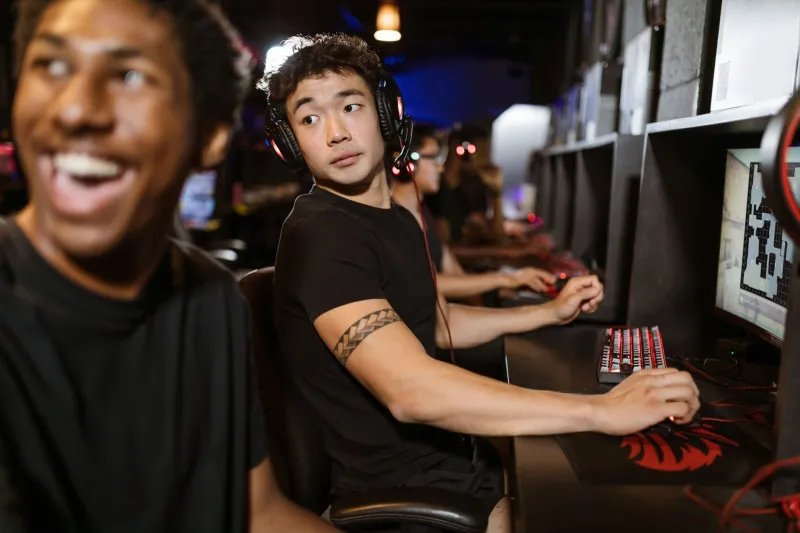
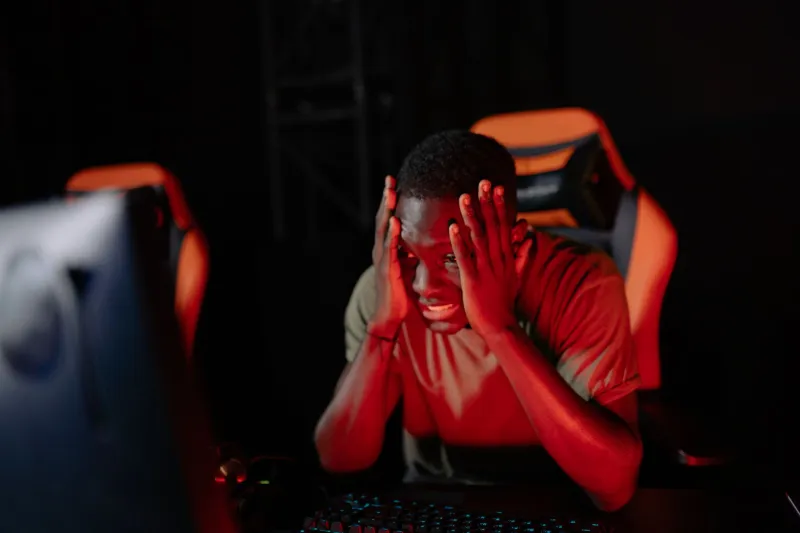
Here's a scenario that'll sting if you've lived it: you call the rotation early, you ping the objective, you commit your team's resources to a play you know is correct — and then the whole thing falls apart in about four seconds flat. The enemy was already there. The angle was wrong. The timing was off by a beat you couldn't account for.
But here's the part nobody talks about. You weren't wrong at the start. Your initial read? Solid. The problem was everything that happened after you decided you were right.
That's the confidence tax. And it costs players more rounds, more ranked LP, and more tournament runs than bad mechanics ever will.
What the Confidence Tax Actually Looks Like
Let's be precise about what we're describing here, because it's not just ego. It's not some cartoon villain standing in the corner of your brain telling you you're the best. The confidence tax is subtler and way more dangerous than that.
It shows up like this: you form a read based on real information — cooldowns, positioning, economy, map pressure, whatever — and that read is genuinely good. Then new information comes in that contradicts it. A rotation you didn't expect. A resource your opponent conserved when they should've burned it. A timing that's half a second off from the pattern you've seen a hundred times.
And instead of updating, you double down. Not because you're arrogant. Because you were right before, and your brain has a hard time separating "this read was correct ten seconds ago" from "this read is correct right now."
That gap — that tiny window between when your read was accurate and when it stopped being accurate — is where most competitive players bleed out.
What Tournament Footage Keeps Showing Us
Watch enough high-level play — and we mean really watch it, not just the highlight reels — and a pattern becomes impossible to ignore. The players who get stuck in that upper-mid rank purgatory, the ones who are clearly skilled but can't seem to close the gap on the truly elite, tend to share one trait: they commit harder to a failing strategy the longer it fails.
It's almost like the sunk cost fallacy wearing a gaming headset.
There's been some genuinely revealing stuff coming out of post-match interviews at the pro level over the last couple of years. Players who've won championships — actual hardware, not just deep runs — keep coming back to the same idea when they describe their decision-making process. It's not that they trust their reads more. If anything, they trust them less. Or more accurately, they hold those reads more loosely, like they're carrying something they're fully prepared to put down the second it stops making sense.
One framing that keeps surfacing in competitive circles: the best players treat a read like a working hypothesis, not a commitment. Scientists don't get emotionally attached to a hypothesis. They run it until the data tells them to drop it, and then they drop it without drama.
Grinders treat a read like a bet they've already placed. And nobody likes admitting they bet wrong.
The Humility Loop That Actually Wins Games
Here's the uncomfortable truth at the center of all this: the mental skill that separates champions from players who are permanently one step below their potential isn't confidence. It's a specific, practiced form of humility — the ability to say "this isn't working" without that admission feeling like a personal failure.
That sounds simple. It is not simple.
Because in a competitive environment, especially one where you've put in thousands of hours, your reads feel like you. Your game knowledge is tied up in your identity as a player. When the read fails, it doesn't just feel like a wrong call — it feels like an attack on the version of yourself you've built through all that grind. And the psychological response to that feeling is almost always to defend the read harder, to find reasons why it was still correct, to blame execution or teammates or lag rather than the original decision.
The players who break through that ceiling have found a way to detach. Not to stop caring — caring is what got them to a high level in the first place. But to care about winning more than they care about being right.
That's a distinction that sounds obvious written out and is genuinely hard to live inside a game where every decision is happening at speed, under pressure, with real stakes attached.
How to Actually Practice This
The good news is that this is trainable. It's not some innate personality trait you either have or you don't. But it requires deliberate work, and it requires honesty that most players actively avoid.
Start with VOD review, but flip the script on how you're using it. Instead of watching your footage to confirm what you did right, watch it specifically hunting for the moment your read stopped being accurate. Not where you made a bad decision — where a good decision became a bad one because you didn't update it. That moment is almost always there. Finding it repeatedly teaches your brain to recognize it in real time.
Another thing that actually works: building a short internal phrase you use at the moment of doubt. Something that functions like a circuit breaker. When new information contradicts your current read, you have a mental trigger that forces a one-second pause before you commit further resources. One second is enough to ask: is this still right, or am I just protecting the call I already made?
It sounds almost embarrassingly low-tech. Players who've implemented versions of this — especially in team environments where the pressure to look decisive is enormous — consistently report that it changes how they process mid-game adjustments.
The Real Flex Is Letting Go
Competitive gaming culture loves to celebrate conviction. The hard call. The player who reads the enemy and locks in while everyone else hesitates. And that player is real — that moment is real, and it matters.
But the version of that story that doesn't get told enough is the player who made the hard call, watched it start to fail, and had the quiet confidence to walk it back without losing their composure or their teammates' trust.
That's the actual mad skill. Not the read. The release.
The confidence tax doesn't get paid by players who lack belief in themselves. It gets paid by players who can't distinguish between believing in their ability to make good reads and believing that every read they make is good. One of those is a competitive edge. The other is a trap disguised as one.
Champions know the difference. And they practice knowing it, every single session, until letting go of a bad read feels less like admitting defeat and more like making the next right move.