Ghost Accounts Are Haunting Your Ranked Ladder — And Warping What 'Good' Even Means

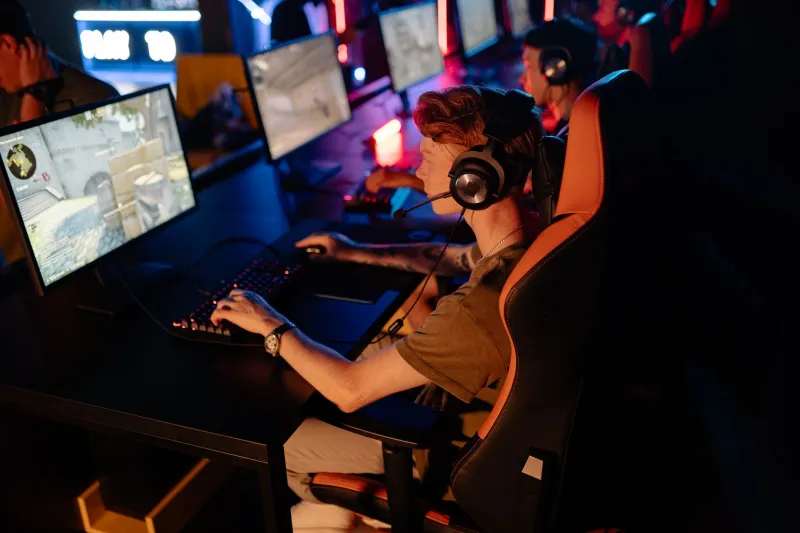
Photo by Photo by Alex Haney on Unsplash on Unsplash
You're deep into a ranked session, playing clean, making solid reads, and then some account with 47 games played and a suspiciously generic username just dismantles your team like a practice dummy. The mechanics look wrong for the rank. The decision-making is too fast. The positioning feels almost offensively perfect. You check the profile after the match and something doesn't add up.
Welcome to the smurf economy — and it's a lot bigger than you think.
The Market Nobody Talks About
Pro players running alternate accounts isn't a new phenomenon. It's been baked into competitive gaming culture for years. But what's changed is the scale. With streaming making ranked gameplay a content format in its own right, top-tier players have more incentive than ever to create fresh accounts — whether it's for content, dodging harassment, avoiding targeted play, or just warming up without the pressure of their main ladder sitting on the line.
The result? A shadow economy of high-skill accounts distributed across every rank tier, quietly distorting the data that the rest of us use to benchmark our progress.
Coaching platforms that track player development have started flagging a consistent pattern: players in the mid-tier ranks — think Gold through Platinum in most titles — are reporting an uptick in what they describe as "unreadable" opponents. Players who don't play like their rank. Players who punish mistakes that nobody at this level is supposed to punish.
The frustrating part isn't the loss. It's the confusion.
When the Feedback Loop Breaks
Here's the psychological damage that doesn't get enough attention: ranked ladders are supposed to function as calibrated feedback systems. You play, you make mistakes, you get punished in proportion to the skill gap between you and your opponent. That proportionality is how you learn. It's how you identify which habits are costing you and which skills need sharpening.
When a Challenger-level player is sitting in your Platinum lobby on a fresh account, that feedback loop snaps. You're not getting punished for your mistakes at your level — you're getting punished by someone operating three or four skill tiers above the ceiling you're trying to break through. The lesson you take away isn't calibrated. It's noise dressed up as data.
And aspiring competitors are internalizing that noise in really damaging ways.
Coaches who work with players trying to break into semi-pro play have started spending significant time in sessions just helping athletes separate real skill gaps from smurf-induced confusion. The conversation comes up constantly: "I don't understand why I keep losing to players with weird playstyles." More often than not, the answer is that the playstyle isn't weird — it's just operating from a completely different knowledge base than anything else in that rank tier.
What the Data Actually Shows
Smurf detection systems have gotten more sophisticated across major titles, and the numbers they surface are striking. Independent analyses of matchmaking data have consistently found that in popular competitive titles, anywhere from 8 to 15 percent of accounts in certain rank bands display behavioral signatures associated with sandbagging — things like unusually high win rates on first-time champions or heroes, performance metrics that spike dramatically after the first few games, and mechanical stats that sit well above the 99th percentile for their displayed rank.
That's not a rounding error. At scale, that's a meaningful chunk of your ranked experience being shaped by players who fundamentally don't belong in that matchmaking pool.
Some developers have responded with more aggressive detection and account flagging. But enforcement is patchy, appeals processes create delays, and the most skilled players are often the best at gaming detection systems — keeping win rates artificially lower, spacing out dominant performances, playing off-meta picks that confuse algorithmic pattern recognition.
Learning From the Ghost
Here's the reframe that competitive coaches are increasingly pushing: instead of treating a suspected smurf game as a loss to discard, treat it as free access to a coaching session you'd otherwise never afford.
When you're playing against someone operating significantly above your rank, you're seeing decision-making in real time that your normal ranked opponents can't show you. Where are they positioning before the fight starts? What are they tracking that you're ignoring? When do they choose not to engage?
The key is separating the mechanical gap — which you can't close in one session — from the decision-making gap, which you absolutely can study and learn from. You might not be able to execute what they're doing. But you can recognize why it worked.
Some coaches have started building specific VOD review frameworks around smurf encounters, using them as high-density learning material precisely because the decision quality is so much higher than what players typically face in their bracket. The loss stings. The lesson, if you pull it out correctly, is genuinely valuable.
The Bigger Problem With the Ladder
Beyond the individual psychological toll, the smurf economy is doing something more structurally damaging to competitive gaming culture: it's making rank feel arbitrary.
When players can't trust that their rank reflects a real skill level — either because they're getting stomped by ghosts on the way up, or because they know their own rank might be inflated by dodging tougher matchups — the entire ladder loses its meaning as a competitive metric. And if rank loses meaning, so does the climb.
For a generation of players who are genuinely trying to develop real competitive skills, that's not a minor inconvenience. It's an erosion of the core feedback mechanism that makes ranked play worth taking seriously in the first place.
The smurf economy isn't going away. The incentives are too strong, the enforcement is too inconsistent, and the culture around it is too normalized. But understanding what it's doing to your mental model of skill — and learning to separate real growth signals from smurf-generated noise — might be the most underrated meta-skill in competitive gaming right now.
Outthink the ladder. Even when the ladder is lying to you.