Silence Is a Skill: Why the Best Teams Are Learning to Shut Up at the Right Moment

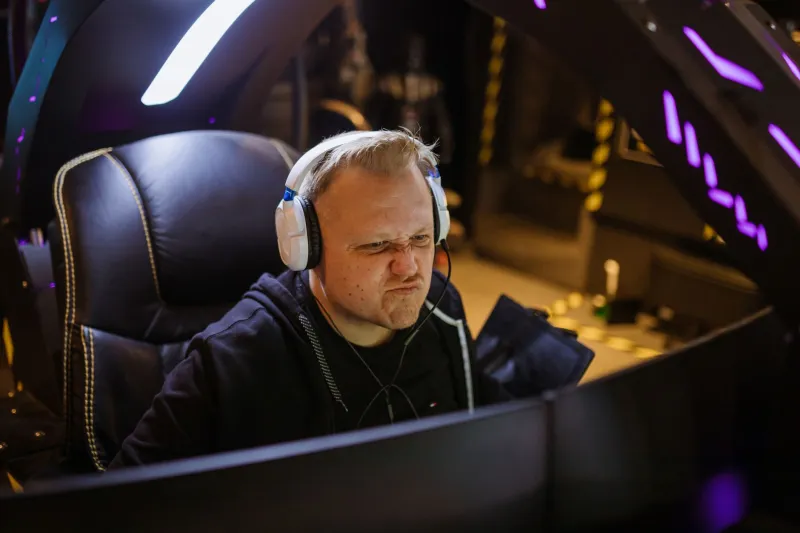
Photo by Photo by Stem List on Unsplash on Unsplash
Watch enough high-level team gameplay and you'll notice something that sounds almost paradoxical: the most coordinated teams aren't always the loudest ones. While plenty of squads are drowning in callouts, information dumps, and constant verbal check-ins, some of the cleanest team play you'll ever see happens in near-silence — a few sharp words, a shared read, and then execution.
That's not an accident. And it's not just a style preference. A growing number of coaches and performance analysts are making the case that constant communication isn't the competitive advantage it's been sold as. In fact, they argue, the obsession with callout culture might be actively making teams worse at the moments that matter most.
The Callout Culture Assumption
The prevailing wisdom in team-based esports has been consistent for years: communicate everything, share all information, keep the verbal channel active. It makes intuitive sense. In games where information is the primary competitive resource — knowing enemy positions, tracking cooldowns, reading opponent patterns — sharing that information as fast as possible seems obviously good.
And to a point, it is. Communication transforms a group of individual players into something that can actually coordinate. Nobody serious is arguing for going silent all the time.
But there's a version of this that's gone too far, and it's showing up in how younger competitive players are developing — or failing to develop — their individual reads.
Coaches at the collegiate and semi-pro level have started flagging a consistent pattern: players who grew up in heavily coached, highly communicative team environments often struggle to make independent decisions under pressure. When the callouts stop — when comms break down in a chaotic fight, when a teammate's mic dies at a critical moment, when the team is in a situation nobody pre-planned for — these players freeze. Not because they lack mechanical skill, but because they've never had to trust their own read without external confirmation.
They've been trained to wait for the information instead of developing the instinct to generate it themselves.
The Cognitive Cost of Constant Input
Here's the thing about verbal communication that doesn't get enough attention in esports coaching discussions: processing language is cognitively expensive.
When you're in a high-speed competitive moment and a teammate is feeding you callouts, your brain isn't just passively receiving that information. It's actively decoding language, integrating it with your existing game-state model, and updating your decision-making framework — all while simultaneously processing visual information, managing your own mechanical execution, and tracking multiple moving variables.
For experienced players with deeply internalized game knowledge, that integration can happen fast enough that the communication genuinely helps. But there's a threshold. When communication volume exceeds a player's processing capacity, the callouts stop being helpful and start being interference. They're consuming cognitive bandwidth that would otherwise go toward independent reads and real-time adaptation.
Sports science research on team coordination has documented this phenomenon extensively in traditional athletic contexts — the over-coached athlete who performs worse under heavy verbal instruction than they do when left to trust their trained instincts. Esports is only beginning to seriously apply this research, but the coaches who are paying attention are changing how they build team communication systems.
Teams That Build in the Quiet
Some of the more innovative coaching approaches in competitive play right now involve what practitioners are calling structured silence windows — deliberately designed phases of play where communication is restricted to essential information only, or cut off entirely.
The goal isn't chaos. It's calibration. By forcing players to operate without the verbal safety net for specific portions of practice, coaches are building the individual read capacity that constant communication tends to atrophy. Players have to trust their own spatial awareness. They have to develop genuine anticipation instead of reaction to callouts. They have to make decisions and live with them without waiting for team confirmation.
The results, according to coaches who've implemented these systems, are striking — not just in the quiet moments, but across the board. Players who've trained with silence windows show better decision-making under comms pressure because they've internalized the game-state model more deeply. The callouts, when they do come, land on a foundation of genuine understanding instead of passive information reception.
Teams in tactical shooters have been particularly active in exploring this space. When you look at how the cleanest executes work at the highest levels — the ones that don't fall apart when one player gets picked early or communication fragments mid-round — there's almost always a layer of pre-internalized understanding underneath the verbal coordination. The comms are supplementing independent reads, not replacing them.
The Young Player Problem
The stakes of this conversation are highest for developing players, and the competitive scene has a real problem brewing here.
A generation of aspiring esports competitors has grown up watching team play through streams and broadcast, where communication is often amplified and highlighted as a feature. They've internalized "good teams talk a lot" as an axiom. And when they form their first competitive squads, they replicate what they've seen — constant callouts, continuous information sharing, verbal check-ins on every decision.
What they don't see in the broadcast is the individual practice those pro players did to build the underlying reads that make the communication meaningful. They see the output — coordinated team play — without understanding the input: years of solo development that created players capable of generating real-time game-state understanding without external prompting.
Building a team of players who need constant callouts to function is building a team with a single point of failure. Disrupt the communication — technical issues, tilt, a chaotic fight that breaks the structured script — and the whole system collapses.
Rethinking What Good Teamwork Looks Like
The best teams aren't the ones that talk the most. They're the ones where communication means something because it's built on a foundation of players who could also function without it.
That means investing in solo development that specifically builds independent reads. It means practicing in environments that deliberately restrict communication to expose gaps. It means teaching players to choose when to communicate rather than defaulting to constant verbal output as a comfort mechanism.
The callout isn't the skill. The read underneath it is the skill. The callout is just how you share it.
Outlast the noise. The teams that figure that out first are the ones building something real.