Streamers Are Crashing the Esports Party — and Competitive Gaming Is Better for It

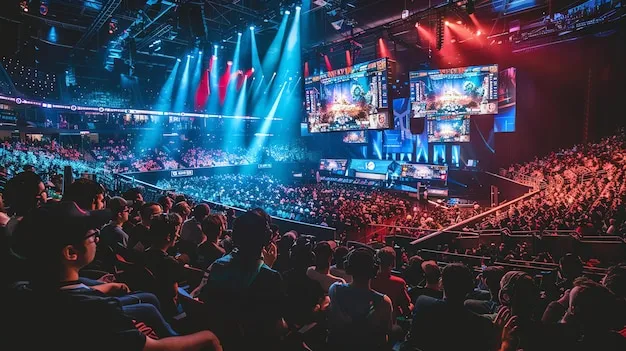
Photo by Photo by Babak Eshaghian on Unsplash on Unsplash
Let's be honest: the traditional esports model had a visibility problem long before Twitch streamers started pulling seven-figure viewer counts. League Championship Series matches were airing on platforms most casual fans had never heard of. Major tournaments were running on Sunday mornings when half their target audience was still asleep. The production was polished, the competition was elite, and the audience was... not growing the way anyone wanted.
Then the streamers showed up. And now everyone has opinions.
The Old Guard vs. the New Wave
There's a real tension in competitive gaming circles right now, and it's worth naming directly. On one side, you have traditional esports — structured leagues, franchise slots, contracted players, and a model built around the idea that competitive gaming can mirror conventional sports broadcasting. On the other side, you have a streaming ecosystem that operates on pure personality, parasocial connection, and the kind of chaotic authenticity that no production team can manufacture.
Purists will tell you that streamers are diluting the competitive brand. That invitational tournaments stacked with content creators cheapen the achievement of players who grind ranked queues for years to earn their spot. That entertainment is the enemy of legitimacy.
They're not entirely wrong. But they're missing the bigger picture by a wide margin.
Twitch Is a Talent Pipeline Whether Orgs Admit It or Not
Some of the most mechanically impressive players in several major titles right now built their reputations entirely on stream before a single org came calling. They didn't come up through amateur leagues or collegiate programs. They went live, they played at an absurd level, they built audiences, and the competitive scene eventually came to them.
This is a genuinely new kind of career path, and it's producing a type of competitor that didn't exist five years ago: the player who can both perform under pressure and communicate what they're doing in real time to a live audience. That combination is extraordinarily rare, and platforms like Twitch are the only environments where it gets developed.
Organizations that are still treating streaming presence as a secondary concern — a marketing box to check after competitive results — are leaving money and talent on the table. The smarter orgs have already figured out that a player with 200,000 followers and a 60% win rate might be more valuable to the franchise than a mechanically superior player with zero streaming presence and a contract nobody outside the scene has heard of.
The Invitational Effect: Controversy or Catalyst?
Nothing exposes the streamer-vs-traditional-esports tension quite like the rise of creator invitationals. Events like the various Fortnite and Warzone celebrity tournaments, or the parasocial-driven chess events that somehow pulled massive concurrent viewership, have become a cultural force that traditional tournament organizers are scrambling to understand.
The criticism is predictable: these events aren't real competition. The results don't matter. The stakes are artificial.
But here's what actually happened every single time one of these events ran: millions of viewers who had never watched a traditional esports broadcast tuned in. A percentage of them got curious. Some of them started following competitive scenes they'd never engaged with before. The funnel works.
You don't grow an audience by making the product more exclusive. You grow it by making it more accessible. Creator events are, functionally, the best marketing tool competitive gaming has ever had — and the industry didn't even have to build them from scratch. The streamers did it for free.
The Dual-Threat Player Is the Future
The emerging archetype in competitive gaming isn't the silent mechanical genius who lets their ranked stats speak for themselves. It's the player who can frag at the highest level and build a community around their game. Who can compete in a championship bracket on Saturday and go live for 50,000 viewers on Tuesday breaking down what they learned.
This isn't a compromise. It's an evolution.
The players who figure out how to operate in both worlds are building something more durable than any single tournament result. They're building audiences that travel with them across titles, across orgs, across career transitions. In a space where game lifecycles are shortening and org stability is never guaranteed, that kind of independent platform is the closest thing to job security competitive gaming has ever offered.
Coaches and analysts who work with younger players are already starting to factor streaming literacy into development conversations. Not because entertainment matters more than performance — it doesn't — but because a player who can articulate their decision-making on stream is also a player who has done the metacognitive work to understand their own game at a deeper level. The skills transfer.
What This Means for the Scene Going Forward
The friction between streaming culture and traditional esports isn't going away. If anything, it's going to intensify as more money flows into content creation and the gap between top streamer earnings and mid-tier competitive salaries continues to widen. Some players are going to choose audiences over trophies. That's a real tradeoff the scene needs to reckon with honestly.
But the narrative that streaming is hurting competitive gaming fundamentally misreads the data. Viewership for major tournaments is up in titles where streaming culture is strong. Younger audiences who discovered competitive gaming through a personality-driven stream are aging into dedicated fans of structured league play. The pipeline flows in both directions.
The future of competitive gaming probably doesn't look like a clean separation between "real" competitors and content creators. It looks like a spectrum — and the smartest players, orgs, and platforms are the ones figuring out how to operate across all of it.
The Mad Play Here Is Adaptation
Every era of competitive gaming has had its purists who insisted the new thing was ruining the old thing. LAN replaced local scenes. Online ranked replaced LAN. Streaming is reshaping both. The players and organizations that outlast the noise are always the ones who adapt fastest.
The streaming meta didn't break esports. It just forced esports to level up.